There’s something about dragons that refuses to fade, no matter how modern the world becomes.
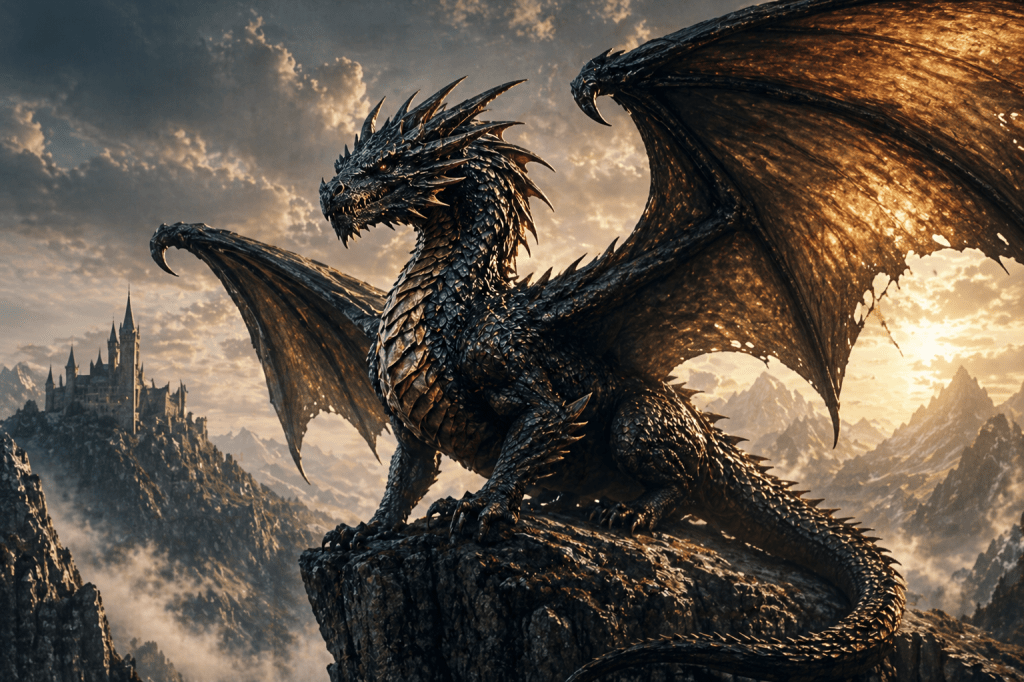
I was looking at this dragon illustration the other day—massive wings stretched wide, scales layered like armor, eyes glowing with that unsettling intelligence—and it hit me: dragons aren’t just mythical creatures. They’re ideas we’ve been carrying for thousands of years.
And honestly? The more you look into them, the more fascinating they become.
The Creature That Exists Everywhere
One thing that really stands out is how dragons show up in almost every culture.
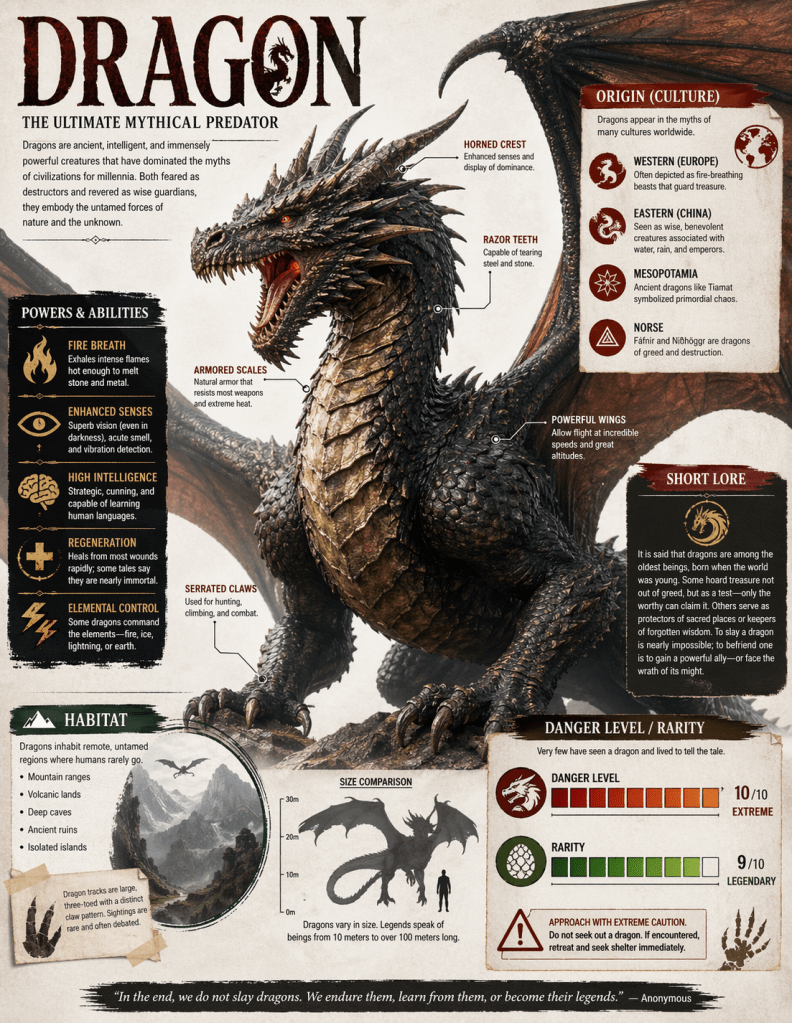
In Western stories, they’re usually the terrifying kind—fire-breathing beasts guarding treasure, symbols of destruction and greed. The kind you fight.
But shift to Eastern traditions, especially in China, and suddenly dragons are wise, calm, almost divine. They’re connected to water, rain, emperors—more like protectors than monsters.
Then you go even further back, into ancient Mesopotamian myths, and dragons represent chaos itself. Not evil exactly… just raw, untamed creation energy.
Same creature. Completely different meanings.
Which makes you wonder—are dragons really about the creature… or about us?
Built to Be Unstoppable
If you break down a dragon physically, it’s basically a perfect predator.
- Fire breath – Not just dangerous, but symbolic. Fire is power, destruction, transformation.
- Armored scales – Nature’s version of impenetrable defense.
- Razor teeth & claws – Pure survival tools. No elegance, just efficiency.
- Wings – Freedom, dominance, and the ability to strike from anywhere.
- Enhanced senses – They don’t just see you… they know you’re there.
And then there’s the part that makes them even more unsettling:
Intelligence.
Dragons aren’t mindless beasts. In most stories, they think, plan, and sometimes even speak. They understand humans—sometimes better than humans understand themselves.
That’s what makes them feel less like animals… and more like rivals.
The Part That Feels Almost Real
Here’s where it gets interesting.
Legends say dragons can regenerate, live for centuries, maybe even control elements like fire, ice, or lightning. Obviously, that’s fantasy… but the idea behind it isn’t.
Every trait a dragon has is something humans have always feared or admired:
- Strength
- Intelligence
- Longevity
- Control over nature
Dragons are basically the ultimate exaggeration of everything powerful.
They’re what happens when imagination asks:
“What if something had all of it?”
Where You’d (Never) Find One
If dragons were real, they wouldn’t be hanging around cities.
They’d be exactly where the stories place them:
- Remote mountains
- Volcanic regions
- Deep caves
- Forgotten ruins
- Isolated islands
Places humans either avoid… or don’t fully understand.
There’s something very intentional about that. Dragons live at the edges of the known world. Right where curiosity meets fear.
The Strange Relationship Humans Have With Dragons
What I find most interesting isn’t their power—it’s how humans interact with them in stories.
You either:
- Try to kill the dragon
- Try to steal from it
- Try to befriend it
And each choice says something different.
Killing a dragon is about conquering fear.
Stealing from it is about greed.
Befriending it… that’s about respect.
Some legends even say that slaying a dragon is nearly impossible—but earning its trust? That might be even harder.
Why Dragons Still Matter
Even now, in a world full of technology and logic, dragons haven’t disappeared.
They’re still everywhere—movies, games, books, art.
Why?
Because dragons represent something we haven’t outgrown:
The unknown.
Not just what’s out there in the world… but what’s inside us.
Fear. Power. Ambition. Curiosity.
Dragons are that voice that says:
“There’s something bigger than you. What are you going to do about it?”
Final Thought
There’s a line I came across that stuck with me:
“In the end, we do not slay dragons. We endure them, learn from them, or become their legends.”
And honestly, that feels true.
Because maybe dragons were never meant to be defeated.
Maybe they were meant to challenge us.
And maybe… in some strange way… we’ve been chasing them ever since.
 pot of plot
Leave a comment